
Latest Updates
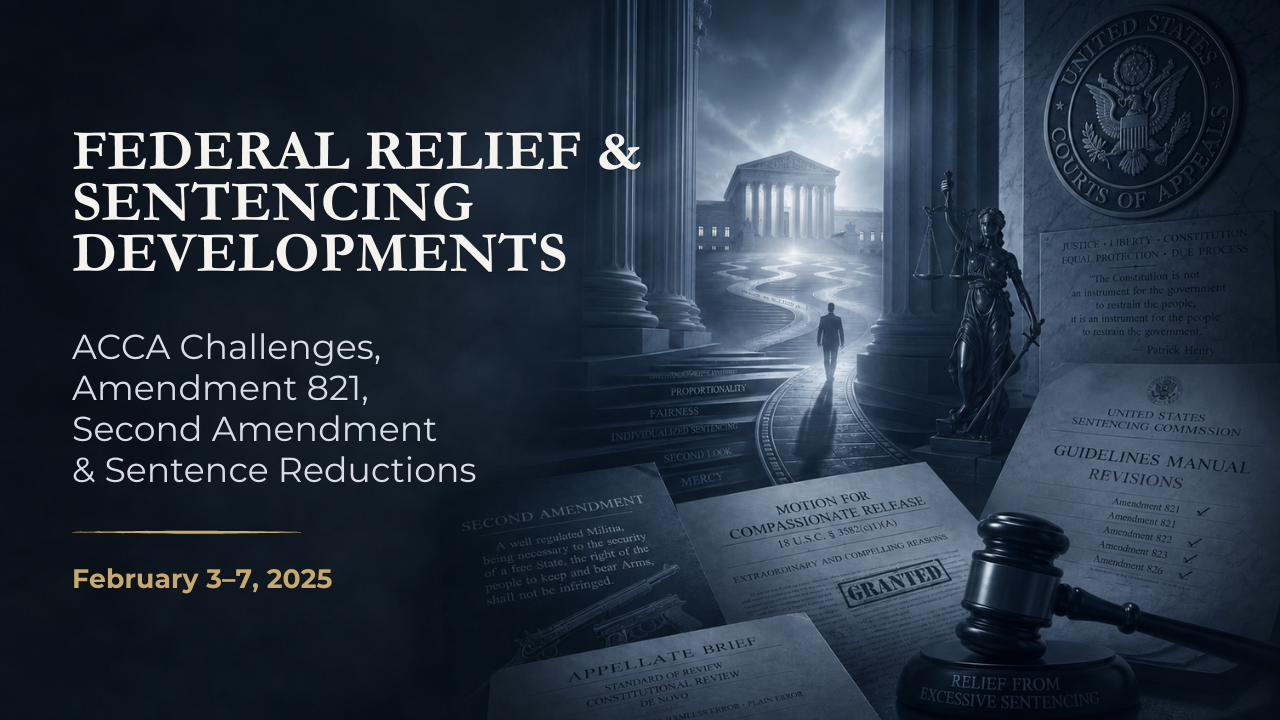
Federal Relief & Sentencing Developments — February 3–7, 2025
ACCA litigation, § 922(g)(3) firearm challenges, sentence reduction developments, sentencing explanation errors, compassionate release considerations, and favorable federal appellate decisions.
This federal sentencing developments bulletin reviews recent appellate decisions involving firearm convictions, Armed Career Criminal Act litigation, guideline amendments, compassionate release developments, and post-conviction relief considerations.
Federal Sentencing Developments Executive Summary
Recent federal sentencing developments include significant appellate rulings involving ACCA enhancements, Sixth Amendment confrontation rights, improper use of proffer statements, retroactive guideline amendments, and constitutional challenges to federal firearm prohibitions.
Courts also continued examining compassionate release arguments involving sentencing disparities and excessive sentences imposed under prior sentencing frameworks.
Supreme Court Watch
The Supreme Court did not hold a conference during this reporting period. Oral arguments were scheduled for February 24–26, 2025, with several criminal and sentencing matters expected to remain under review during the current term.
Major Federal Appellate Victories
Sixth Amendment Confrontation Violation Results in New Trial
In United States v. Taylor, the appellate court held that restrictions placed on cross-examination violated the defendant’s constitutional confrontation rights. Because the error was not harmless, the convictions were reversed and the case remanded for a new trial.
Sentencing Explanation Error Requires Resentencing
In United States v. Jackson, the court found procedural error where the sentencing court failed to adequately explain the sentence imposed or meaningfully address mitigation arguments presented by the defense. The sentence was vacated and remanded.
ACCA Predicate Convictions Reexamined
In United States v. Rose, the Fifth Circuit vacated the denial of § 2255 relief after a significant intervening change in Texas law affected whether prior robbery convictions qualify as ACCA predicate offenses.
This decision highlights the continuing importance of state-law developments in federal ACCA litigation.
Improper Use of Proffer Statements Leads to Reversal
In United States v. Grogan, the Sixth Circuit found that portions of a defendant’s proffer-session statements were improperly admitted at trial. Because the error was not harmless, the convictions were reversed and remanded.
Amendment 821 Sentencing Relief
In United States v. Easterling, the Seventh Circuit remanded for resentencing after retroactive Guideline amendments eliminated status points that had increased the defendant’s criminal history score.
Amendment 821 continues to generate significant federal sentencing litigation involving eligibility for sentence reductions.
§ 922(g)(3) Challenge Revived
In United States v. Cooper, the Eighth Circuit vacated and remanded a conviction under § 922(g)(3), requiring further analysis under the Supreme Court’s Second Amendment framework established in Bruen.
The decision demonstrates continuing litigation over the constitutionality of firearm prohibitions involving drug users.
Compassionate Release & Sentence Reduction Developments
A notable district court opinion in United States v. Cannon granted sentence reduction relief based in part on extraordinary sentencing disparity between co-defendants.
The court emphasized that the defendant received a de facto life sentence after exercising his constitutional right to trial while co-defendants who accepted plea agreements received dramatically shorter sentences.
The opinion reflects ongoing judicial willingness in some cases to consider extreme sentencing disparities and evolving sentencing standards as part of compassionate release analysis.
Why These Developments Matter
Recent federal appellate decisions continue to reshape litigation involving ACCA enhancements, firearm prohibitions, sentencing procedure, Amendment 821 eligibility, compassionate release, and constitutional trial rights.
Individuals pursuing federal relief should understand that changes in appellate precedent, sentencing guidelines, and constitutional doctrine may create new opportunities for review depending upon the specific facts and procedural posture of a case.